Buying your first RC car: a beginner's guide
Everything we would tell a friend before they bought their first hobby-grade RC car, from choosing the right type to where you can drive it in the UK without upsetting anyone.
Updated 7 November 2026 · 9 min read
For most beginners, the best first RC car is an electric, ready-to-run (RTR), 4WD truck or buggy with a brushed motor, from a brand that sells spare parts, at between £60 and £180. That combination is easy to drive, forgiving in crashes and cheap to repair. The rest of this guide explains why, and what to look for.
Should I buy a ready-to-run RC car or a kit?
Buy a ready-to-run car for your first RC car unless you specifically want to build one. An RTR car comes assembled with the motor, speed controller, servo and radio fitted, and most budget RTR cars include a battery and charger too. A kit is a box of parts: you build the chassis and buy the electronics, battery and charger separately, which usually costs more overall.
Kits are brilliant for learning how a car works, and building one makes repairs much easier later. If that appeals, a roller kit such as the Absima AB3.4-V2 kit is a good start, but most people are happier driving on day one. Browse ready-to-run cars or car kits.
Electric or nitro: which is better for beginners?
Electric is better for beginners because you charge it and drive it, with no engine to tune, no fuel to buy and very little noise. Nitro cars run on a methanol-based fuel through a small glow engine. They are loud, smoky and great fun, but they need running in, carburettor tuning, a glow starter and after-run maintenance.
Noise also matters in the UK, where most of us drive near houses. If the sound of an engine is what draws you in, a nitro RTR such as the FTX Zorro trophy truck is a reasonable way in, but budget for fuel and nitro tools and find somewhere you will not bother the neighbours. See the nitro range.
What scale RC car should a beginner buy?
Choose the scale by where you will drive: 1/24 to 1/18 for indoors and small patios, 1/16 to 1/12 for gardens and short grass, and 1/10 if you have a park, field or rough ground. Scale is the car's size compared with a real one, so a 1/10 car is bigger than a 1/16.
Bigger cars cope with bumps and long grass far better, and their parts are usually tougher, but they cost more and need more space. Small cars are cheaper and easy to use anywhere, but they get stuck in a typical British lawn. Our scales guide goes into the detail.
Brushed or brushless for a first RC car?
A brushed motor is the better choice for most first RC cars because it is cheaper, slower and easier on the rest of the car. Brushless motors are more efficient and much faster, but that speed breaks parts and usually means LiPo batteries. If you are an adult with some space, a mild brushless car such as the Maverick QByte XB Flux, listed at up to 38km/h on 2S, is a sensible compromise. Read our brushed vs brushless guide for more.
What batteries and charger does a beginner need?
A beginner needs the battery and charger that come with the car, plus ideally a second battery and, later, a better charger. Budget RC cars use one of three battery types:
- NiMH: heavy but tough and forgiving. Common in 1/10 brushed cars such as the HPI Jumpshot ST V2, which takes 7.2V NiMH or 2S LiPo packs.
- Li-ion: used in many small cars, such as the Maverick Atom and Blackzon Slyder MT, usually with a simple USB charger.
- LiPo: the most power for the weight, used in most brushless cars. LiPo packs need a balance charger, should never be charged unattended, and must not be run completely flat.
Included USB chargers are often slow, so a decent mains charger is the first upgrade we recommend. Check the voltage (for example 2S is 7.4V, 3S is 11.1V) and plug type before buying a spare battery. Our batteries and chargers guide covers all of this, and you can browse batteries and chargers.
What is a 2.4GHz radio and why does it matter?
A 2.4GHz radio pairs the transmitter to the car's receiver digitally, so you can drive alongside friends without interference and without swapping crystals, which older radios needed. Every car in our beginner picks uses 2.4GHz. Look for proportional steering and throttle, which means the car responds to how far you move the controls rather than being simply on or off.
Two habits worth learning: switch the transmitter on before the car and off after it, and keep spare AA batteries for the transmitter, because most need them and they are rarely included.
Where can I drive an RC car in the UK?
In the UK you can drive an RC car on your own property, on private land with the owner's permission, and at RC club tracks. Never drive on public roads or pavements. Public parks are covered by local council byelaws, which vary, so check your council's rules before you go, and be prepared to stop if asked.
- Your garden: the easiest place to start. A 1/16 truck is ideal for most lawns.
- Car parks: great for on-road and drift cars, but they are private land. Ask first, and pick quiet times.
- Clubs and tracks: the best way to learn quickly. The British Radio Car Association (BRCA) lists affiliated clubs around the country.
- Be considerate: keep well away from people, dogs and wildlife, do not drive through flower beds or sports pitches, take your broken bits home, and keep noise down early in the morning and late in the evening.
Are RC cars waterproof?
Most RC cars sold as waterproof are really water-resistant: the speed controller, receiver and servo can handle splashes, puddles and wet grass, but the car is not designed to be submerged. Even on a car with waterproof electronics, the bearings, screws and motor can rust or wear faster when wet, and some included batteries and chargers are not waterproof at all.
Since British weather will get your car wet sooner or later, the routine is simple: after a wet run, take the battery out, shake and blow off the water, let it dry somewhere warm, and put a drop of light oil on the bearings. Do not drive through deep water, even if the box says waterproof.
Why do spare parts matter so much?
Spare parts matter because every RC car crashes, and a car you cannot fix is a car you have to replace. The parts that go first on most beginner cars are the front suspension arms, steering knuckles, servo saver, spur gear and body shell.
Before you buy, check that the brand has a parts range. We stock spares for Maverick, HPI, FTX, MJX and Blackzon, among others. Ordering a set of front arms with the car saves a week of waiting after the first big crash.
What else should I buy with my first RC car?
- AA batteries for the transmitter, ideally rechargeable ones.
- A second car battery, so you can keep driving while one charges or cools.
- A better charger, especially if the car came with a slow USB lead.
- A LiPo-safe bag if your car uses LiPo.
- Hex drivers in the sizes your car uses; see tools and workshop.
- The first spares: front arms, a servo saver and a spur gear.
- A spare body shell eventually; see body shells.
Our recommended first RC cars
These are the first cars we would recommend at each budget, all ready-to-run and all from brands with parts support. Prices change, so treat them as a guide.
| Car | Price | Why it suits a beginner |
|---|---|---|
| Maverick Atom AT1 | around £60 | 1/18 4WD, Li-ion, speed limiter, splashproof |
| Blackzon Slyder MT | around £65 | 1/16 4WD, speed dial, waterproof electronics |
| Maverick Qbit MT | around £75 | 1/16 4WD, Li-ion with USB charger |
| Maverick Scout-24 | around £90 | Slow, technical crawling in small spaces |
| HPI Jumpshot ST V2 | around £140 | Full 1/10, brushed, NiMH or 2S LiPo |
| Maverick QByte XB Flux | around £149 | Mild brushless with battery and charger |
| Maverick Quantum2 MT | around £180 | Big 1/10 brushed truck, waterproof ESC |
Good first RC cars

Maverick Rc Atom At1 1/18 4wd Electric Truck - Red
£59.99

Blackzon Slyder MT 1/16 4WD Electric Monster Truck
£64.99

Maverick RC Qbit MT 1/16th Monster Truck - Blue
£74.99
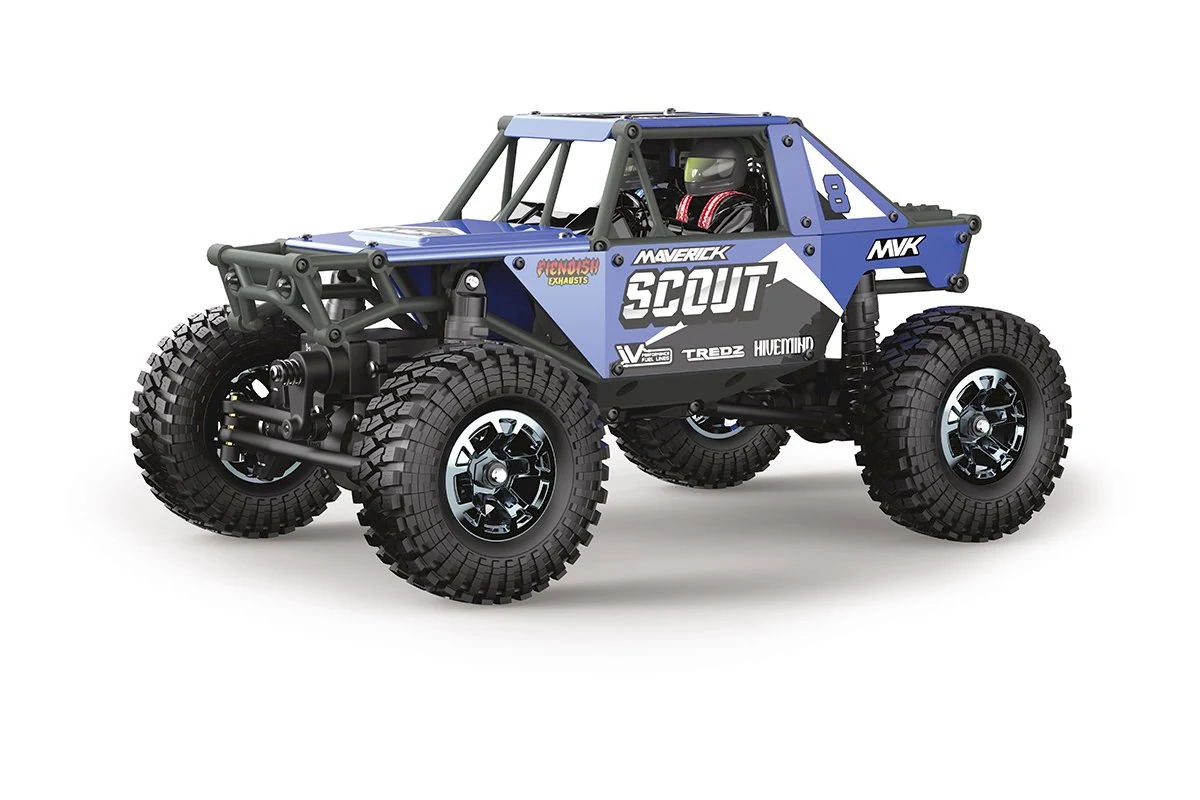
Maverick Scout-24 1/24 RTR Rock Crawler
£89.99

HPI Racing Jumpshot ST V2 - Red
£139.99
Free UK delivery

Maverick QByte XB Flux 1/12 Brushless RTR Off-Road Buggy - Blue (with Battery & Charger)
£148.99
Free UK delivery

Maverick Rc Quantum2 Mt 1/10th Monster Truck - Blue
£179.99
Free UK delivery
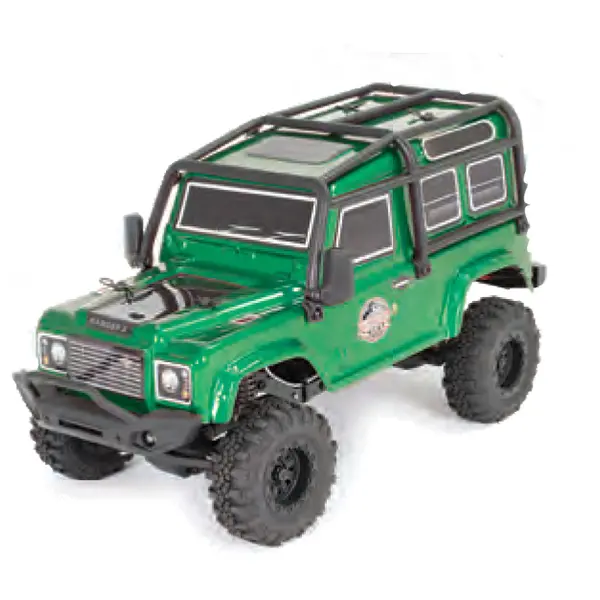
FTX Outback Mini 3.0 Ranger 1:24 Ready-To-Run – Green
£84.99
Buying for a child? Read our best RC cars for kids guide. Want more choice on a budget? See the best cheap RC cars in the UK. Everything we sell is UK stock dispatched from the UK, and orders over £129.99 get free UK delivery.
Questions we get asked
- What is the best RC car for a beginner?
- An electric, ready-to-run 4WD truck or buggy with a brushed motor from a brand with spare parts, such as the Maverick Atom, Maverick Qbit MT or Blackzon Slyder MT. For adults with more space, a 1/10 truck like the Maverick Quantum2 MT is a good first buy. Browse beginner RC cars.
- Is a nitro RC car good for beginners?
- Nitro cars are not ideal for beginners because the engine needs running in, tuning and regular maintenance, and they are loud. Most people are better starting with electric and moving to nitro later if they want to.
- How much should I spend on my first RC car?
- Between around £60 and £180 gets a proper hobby-grade RTR car with parts support. Allow a little extra for a second battery, transmitter AA batteries and a few spares.
- Can I drive an RC car in a public park in the UK?
- It depends on the council. Many parks have byelaws that restrict motorised models, so check your local council's rules first. Your own garden, private land with permission and RC club tracks are always the safer options.
- Can I drive my RC car in the rain?
- If the electronics are waterproof, light rain and puddles are usually fine, but do not submerge the car, and dry it afterwards to stop bearings and screws rusting. Check whether your battery and charger are water-resistant too.
- What does RTR mean?
- RTR means ready-to-run: the car comes assembled with its motor, electronics and radio fitted, and usually with a battery and charger. You may still need AA batteries for the transmitter.